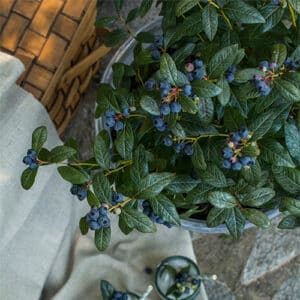
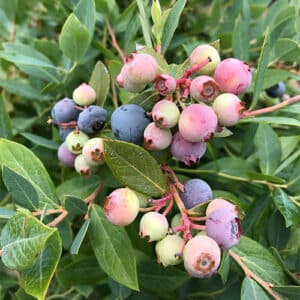
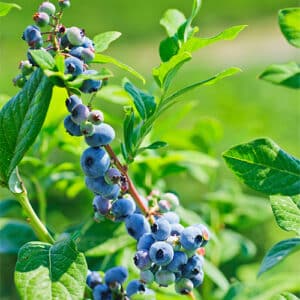
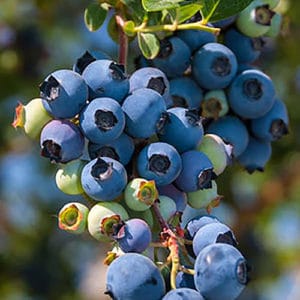
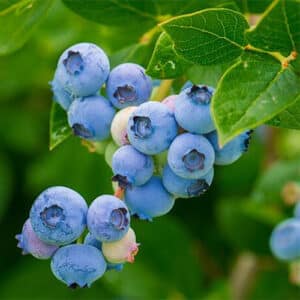
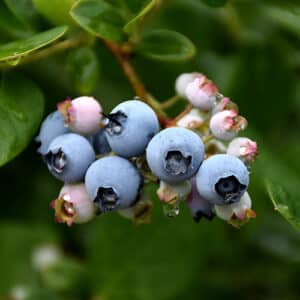
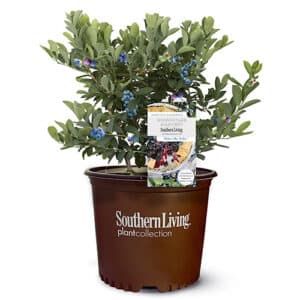
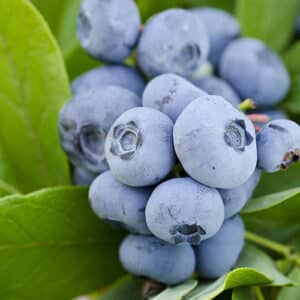
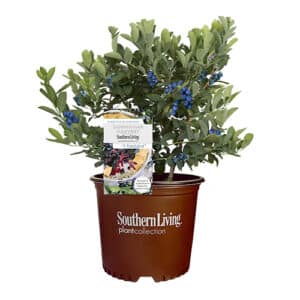
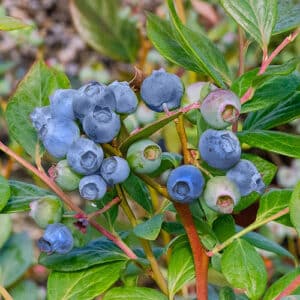
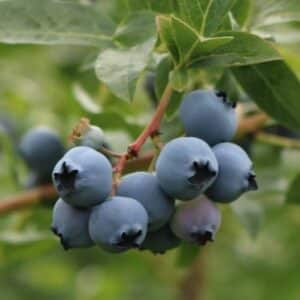
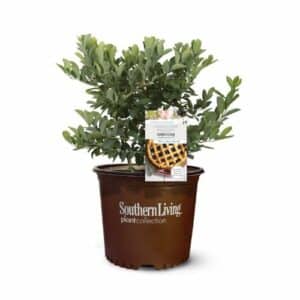
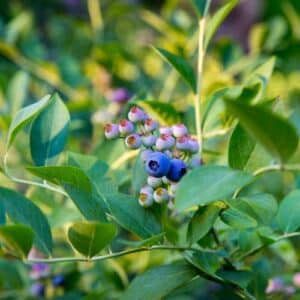
‘Perpetua’ will give you two crops of sweet and delicious blueberries! The first fruit will appear in mid-summer, and then the plant will flower and set fruit a second time in the fall. The leaves are dark green and will turn to deep reds and greens in the winter, making it a beautiful addition to any landscape. It’s easy to care for with very little pruning needed.
USDA zones 4-8
Mature Size- 4-5 feet high x 4-5 feet wide
Recommended Spacing – 48 inches
Used in containers, and landscapes
Full sun to partial shade
Deciduous- foliage loss in winter and new growth in spring
Botanical name- Vaccinium
Blooms white flowers in spring
Ships dormant (no foliage) winter through early spring
Plants are trimmed at times when shipped to promote plant health
Should the plants in your garden be ornamental or useful? Why not both! With Splendid! Blue blueberry, you get a handsome landscape plant with a rounded habit and dusty light blue foliage. That view is joined by an impressive show of tiny white, bell-shaped blooms in the spring. Later on, those flowers turn to extremely tasty fruit, even if there isn’t a compatible pollinator plant nearby. But note that you will definitely get a heavier fruit set if you plant another highbush blueberry nearby. Top reasons to grow Splendid! Blue blueberry? Truly delicious fruit; Handsome blue foliage; Convenient size; Produces Berries; Foliage Interest; Fall Interest; Heat Tolerant
.
USDA zones 6-9
Mature size 36-48 in. W x 36-48 in. H
Full sun to partial shade
Deciduous- foliage loss in winter and new growth in spring
Used in containers, landscapes, and as accents
Recommended spacing 36 inches
Botanical Name – Splendid!™ Blue Vaccinium corymbosum ‘NC4499’ USPPAF, Can PBRAFF
Low maintenance
Plants are trimmed at times when shipped to promote plant health
Ships dormant (no foliage) winter through early spring
Duke is known both for its early season fruit, which is large with a firm, crisp texture, and its high yield of berries. The fruit has a tangy, sweet, delicate flavor. This blueberry bush is an attractive plant with white, pink-tinged flowers in the spring; large, light blue berries in the summer; and vibrant yellow and orange fall foliage. It is a great plant to use for landscape design, as well as in the garden or berry patch. This bush can grow up to six feet tall at maturity. While self-pollinating, this variety benefits from cross-pollination with other cultivars, producing even larger yields.
USDA zones 4-7
Mature Size- 48-72″ H x 48-72″ W
Recommended Spacing – 48 inches
Used in containers, and landscapes
Full sun to partial shade
Deciduous- foliage loss in winter and new growth in spring
Blooms white flowers in spring
Ships dormant winter through early spring
Plants are trimmed at times when shipped to promote plant health
Sharpblue yields abundant crops of the best tasting blueberries around! Its upright, spreading bush habit makes it a great landscape plant. Typically, fruit ripens by late May to early June and harvest may extend over 6 weeks. They grow 5 to 6 feet tall with green foliage and a long harvest period. Sharpblue is self-pollinating. In many cases, you may still want to plant pollinating partners to increase the size of your crops, but with self-pollinating varieties doing so is optional. Perfect for containers, or landscapes!
USDA zones 7-10
Mature size 48-72” W x 60-72” H
Recommended Spacing – 48 inches
Used in containers, and landscapes
Full sun to partial shade
Deciduous- foliage loss in winter and new growth in spring
Blooms white flowers in spring
Ships dormant winter through early spring
Plants are trimmed at times when shipped to promote plant health
The Bluegold blueberry is one of the most delicious and sweetest varieties of blueberries. While it is smaller than many other blueberry shrubs, they produce a bountiful harvest of easy-to-pick berries. This unique blueberry plant has flowers that start blooming in May. After the flowers have bloomed, they fall away and are replaced with light blue blueberries that ripen anywhere between late June and early July. You’ll know that your berries are ready for picking when they turn a light to medium blue color. Bluegolds are prized for the large to medium-sized berries that they produce. They’re known for the large batches of fruit each shrub can produce. They have one of the highest yields for blueberry bushes of their size, and they’re also one of the most dependable blueberry varieties. Like many other varieties of blueberries, the Bluegold Blueberry is self-pollinating. However, cross-pollination with other northern highbush blueberry varieties will produce bigger berries and larger crops per plant.
USDA zones 4-7
Mature size 48-72 inches W x 48-72 inches H
Recommended Spacing – 48 inches
Used in containers, and landscapes
Full sun to partial shade
Deciduous- foliage loss in winter and new growth in spring
Blooms white flowers in spring
Ships dormant winter through early spring
Plants are trimmed at times when shipped to promote plant health
New Hanover is a mid-season, low-chill cultivar that ripens large to very large berries in early June to mid June. This blueberry matures to a size of 5′-6′ tall and 3′ wide, with a spreading habit. New Hanover is a self pollinator! In many cases, you may still want to plant pollinating partners to increase the size of your crops, but with self-pollinating varieties doing so is optional. You’ll get fruit with only one plant!
USDA zones 6-9
Mature size 36 inches W x 60-72 inches H
Recommended Spacing – 60 inches
Used in containers, and landscapes
Full sun to partial shade
Deciduous- foliage loss in winter and new growth in spring
Blooms white flowers in spring
Ships dormant winter through early spring
Plants are trimmed at times when shipped to promote plant health
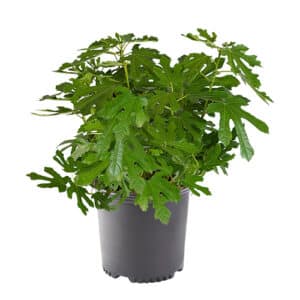
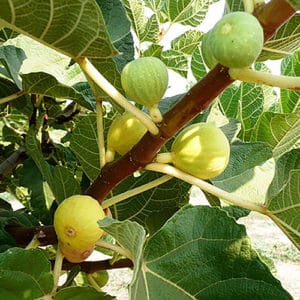
This sweet tasting Fig tree will produce delicious fruit from August to October. Kadota Figs are self-fertile. You will get fruit with only one plant. But, by adding an additional Kadota Fig will drastically increase the size of your crop. Little to no maintenance keep them looking and performing their best. Perfect for containers if you live in colder areas allowing you to bring them indoors in colder months!
USDA zones 7-11
Mature size 15-20 feet H and 6-8 feet W
Recommended Spacing – 180 inches
Used in containers, and landscapes
Full sun to partial shade
Deciduous- foliage loss in winter and new growth in spring
Ships dormant winter through early spring
Plants are trimmed at times when shipped to promote plant health
The Takes the Cake Rabbiteye Blueberry is a newly developed blueberry bush from the Southern Living Plant Collection! This selection produces flavorful berries with a nice firmness and impressive shelf life. Each berry is large and brightly colored, making them as attractive as they are delicious.
Takes the Cake Rabbiteye Blueberry is of the species Vaccinium ashei ‘Vernon,’ and it has moderate chill requirements. Traditionally, 500-550 hours below 40 degrees to produce fruit.
Spring finds this Rabbiteye Blueberry covered in attractive and petite bell-shaped white flowers that will soon become berries. Furthermore, this is an early season bloomer and it generally blooms about a week and a half after the Climax Blueberry.
This deciduous shrub has a controlled, upright growth habit. So it matures to only 4-5′ H x 3-4′ W. For this reason, it makes a fantastic addition to decorative mixed garden beds as a functional and attractive accent.
USDA zones 7a-9b
Mature Size- 4-5 feet high x 3-4 feet wide
Recommended Spacing – 36 inches
Used in containers, and landscapes
Full sun to partial shade
Deciduous- foliage loss in winter and new growth in spring
Blooms white flowers in spring
Ships dormant winter through early spring
Plants are trimmed at times when shipped to promote plant health
The I Declare Blueberry produces flavorful berries with a nice firmness and impressive shelf life. Each berry is large and brightly colored, making them as attractive as they are delicious.
I Declare is of the species Vaccinium corymbosum, and it has moderate chill requirements. Traditionally, 500-550 hours below 40 degrees to produce fruit.
Spring finds this Blueberry covered in attractive and petite bell-shaped white flowers that will soon become berries. Furthermore, this is an early season bloomer and it generally blooms about a week and a half after the Climax Blueberry.
This deciduous shrub has a controlled, upright growth habit. So it matures to only 4-5′ H x 3-4′ W. For this reason, it makes a fantastic addition to decorative mixed garden beds as a functional and attractive accent.
Try it as a border plant, container planting, hedge, or mass planting!
USDA zones 7a-9b
Mature Size- 4-5 feet high x 3-4 feet wide
Recommended Spacing – 36 inches
Used in containers, and landscapes
Full sun to partial shade
Deciduous- foliage loss in winter and new growth in spring
Blooms white flowers in spring
Ships dormant winter through early spring
Plants are trimmed at times when shipped to promote plant health
The For Heaven’s Sake Rabbiteye Blueberry is an exciting new addition to the Southern Living Plant Collection’s blueberry lineup! This variety is a replacement for the Tifblue Rabbiteye Blueberry because it has very similar fruiting specifications but it has more compact growth. It produces large bounties of delicious late-season light-blue blueberries that range from medium to large. These berries are notably firm with fantastic flavor. Expect it to be covered in small bell-shaped white flowers in late spring.
This shrub has a controlled upright growth habit that matures to 4-5′ H x 3-4′ W. Its leaves are blueish-green with purple-red hues in fall.
This variety is characterized by early ripening, late flowering, and a moderate chilling requirement (600-650 hours); which helps ward off damage from late frosts and results in high yields of quality fruit.
USDA zones 6-9
Mature Size- 4-5 feet high x 3-4 feet wide
Recommended Spacing – 36 inches
Used in containers, and landscapes
Full sun to partial shade
Deciduous- foliage loss in winter and new growth in spring
Blooms white flowers in spring
Ships dormant winter through early spring
Plants are trimmed at times when shipped to promote plant health
The Bless Your Heart Rabbiteye Blueberry is a fantastic new blueberry bush from the Southern Living Plant Collection’s DownHome Harvest Edible Collection! Bless Your Heart produces large bounties of medium-sized, firm blueberries rich in flavor and antioxidants! This s an early-blooming variety. Expect it to be heavily coated in petite bell-shaped white flowers. The Bless Your Heart Rabbiteye Blueberry is of the variety Vaccinium ashei ‘Alapaha,’ and generally requires about 450-500 chill hours. This breed is characterized by early ripening fruit, which generally occurs in late May to early June. One of the best aspects of this Blueberry is its controlled, upright growth habit that matures to 4-5’ H x 3-4’ W. Therefore, it’s easy to work into any size of landscape! Rabbiteye Blueberries produce more fruit when they can cross-pollinate with other varieties.
USDA zones 7a-9b
Mature Size- 4-5 feet high x 3-4 feet wide
Recommended Spacing – 36 inches
Used in containers, and landscapes
Full sun to partial shade
Deciduous- foliage loss in winter and new growth in spring
Blooms white flowers in spring
Ships dormant winter through early spring
Plants are trimmed at times when shipped to promote plant health
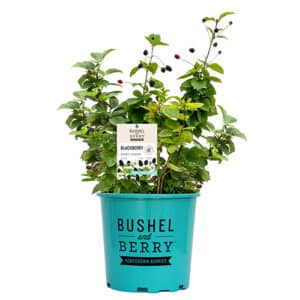
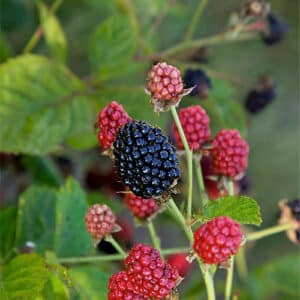
Baby Cakes is a dwarf, thornless blackberry perfect for patio pots with its compact habit. In summer, large, classic and sweet tasting berries present on the plant in a fireworks-like spray of fruit. In most regions, this blackberry will produce twice in one season!
USDA zones 4-8
Mature Size- 3-4 feet high x 3-4 feet wide
Recommended Spacing – 36 inches
Used in containers, and landscapes
Full sun to partial shade
Chill hours- 400
Deciduous- foliage loss in winter and new growth in spring
Blooms white flowers in spring
Ships dormant (no foliage) winter through early spring
Plants are trimmed at times when shipped to promote plant health